Best Beginner Home Workouts for Small Spaces
Blog post description. You do not need a large gym or expensive equipment to begin your fitness journey. This beginner-friendly guide shares simple home workouts designed for small spaces, such as apartments, dorm rooms, bedrooms, and mobile homes. Learn how to stay active, build consistency, and improve your health with easy exercises that can be done almost anywhere.
5/12/20267 min read
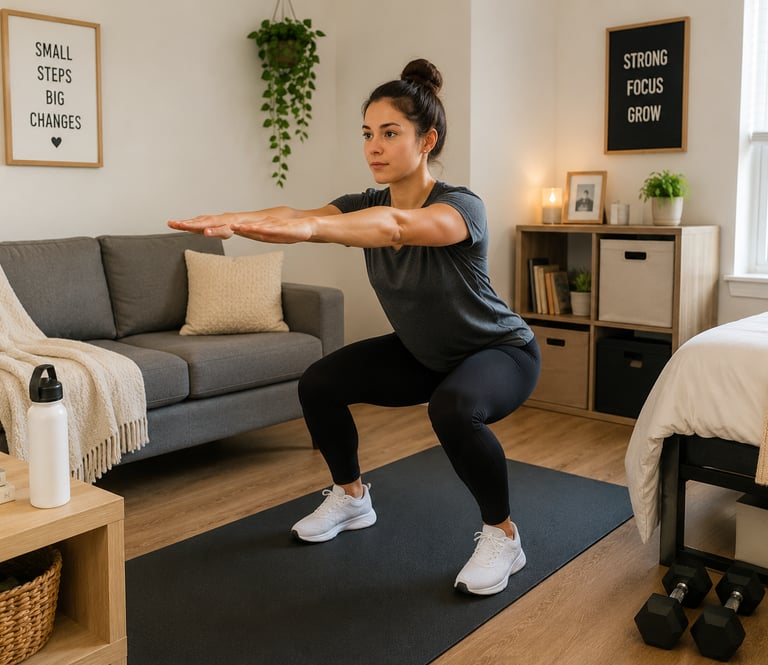
You do not need a large gym or expensive equipment to begin improving your health. Small daily movements performed consistently can help beginners build strength, confidence, and healthier habits over time. The most important step is simply getting started and staying consistent with the space and resources you already have available.
These exercises may appear simple, but consistent effort over time can still produce meaningful progress. Beginners do not need complicated routines to start building healthier habits and improving overall fitness.
Disclaimer: GlowStrong Network provides general fitness and wellness information for educational purposes only. Always consult a qualified healthcare professional before beginning a new exercise program, especially if you have existing health conditions, injuries, balance concerns, or medical limitations. Stop exercising immediately if you experience pain, dizziness, or discomfort.

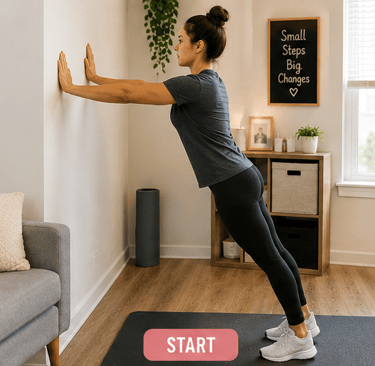


Starting position for a beginner wall push-up.
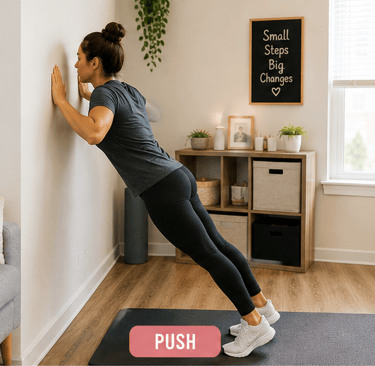
Lower your chest to the wall in a controlled push-up. Then push back to the start
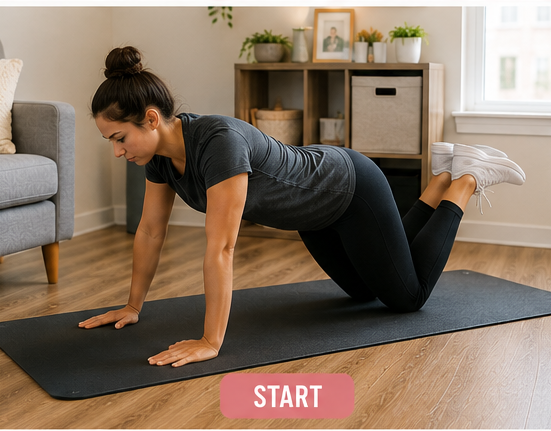

Beginner starting position for a knee push-up.
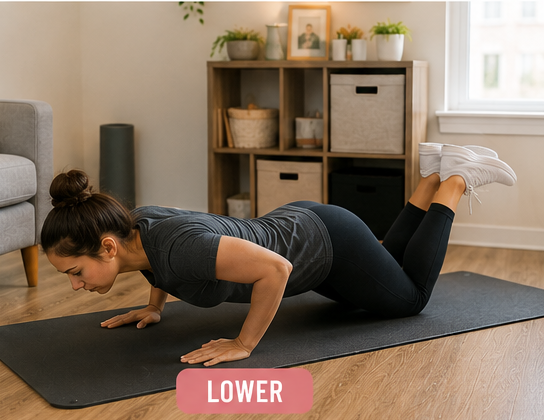

Lowering chest to the floor, then push-up with proper form. Then back to start.
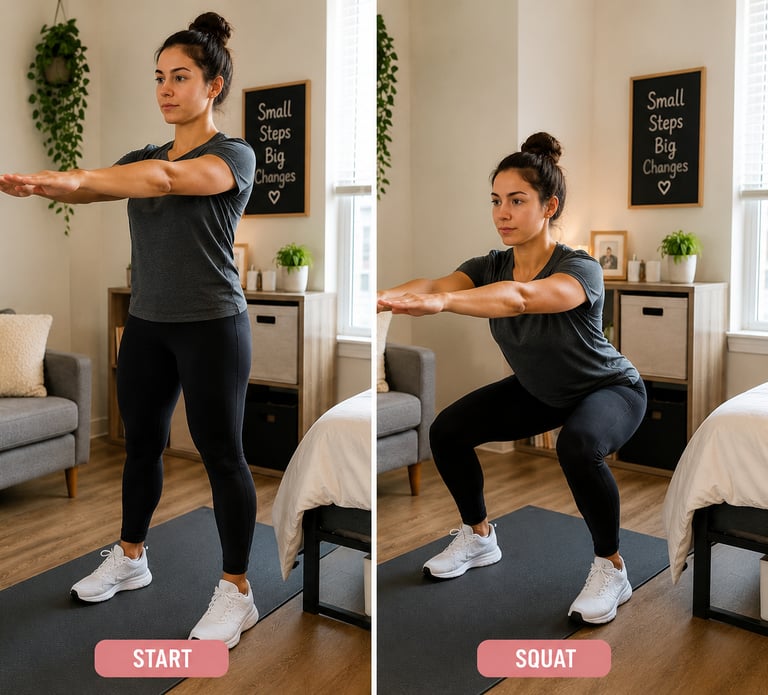
Stand with your feet shoulder-width apart.
Lower your hips back and down as if sitting in a chair
Keep your chest up and knees behind your toes
Push through your heels to return to standing
Start on your forearms and toes
Keep your elbows under your shoulders
Keep your body in a straight line from head to heels
Engage your core and avoid letting your hips sag or lift
Hold for 15 -30 seconds and build up over time. Gradually increase time as you build strength
Sit tall in a sturdy chair with your feet flat on the floor, hip-width apart
Lean forward slightly and stand up using your legs, not your arms


Lie on your back with your knees bent and feet flat on the floor, hip-width apart.


Press through your heels and lift your hips up.
Squeeze your glutes at the top and hold for 1 -2 seconds. Keep your core engaged and avoid arching your lower back.


Lower your hips back down with control
Repeat for the desired number of repetitions
Chair Sit-to-Stands
Chair sit-to-stands are beginner-friendly exercises that help strengthen the legs and improve balance using a sturdy chair. Beginners slowly stand up from a seated position and then return to sitting with control. This movement builds lower-body strength while reducing the balance risks of stepping onto elevated surfaces.
Benefits: Strengthens your legs and glutes, improves balance and mobility. Low impact and beginner-friendly
Starting a fitness journey can feel difficult when you do not have much room to exercise. Many people live in apartments, mobile homes, dorm rooms, or shared spaces where large workout equipment is not practical. Some beginners also believe they need a full gym or expensive machines before they can start getting healthier.
The truth is that fitness does not require a large space. A small area in a bedroom, living room, or even beside a bed can be enough to begin building healthier habits. Simple bodyweight exercises and beginner-friendly movements can still improve strength, energy, balance, and overall health without taking up much room.
Small-space workouts can also remove many of the barriers that stop people from exercising consistently. There is no long drive to the gym, no expensive membership, and no pressure to keep up with experienced athletes. The goal is not perfection. The goal is to start moving and stay consistent.
At GlowStrong Network, we believe fitness should feel realistic and achievable for beginners. No matter how small your space may be, small daily efforts can still lead to meaningful progress over time.
Why Small-Space Workouts Actually Work
Many beginners believe effective workouts require a large gym, expensive equipment, or an entire room dedicated to fitness. In reality, some of the most effective beginner workouts can be done in a very small space using only bodyweight movements and simple routines.
Small-space workouts work because the human body responds to consistent movement, not the size of the room. Exercises such as squats, wall push-ups, marching in place, planks, and lunges can improve strength, balance, endurance, and mobility without requiring much space. For beginners, simple movements performed consistently often produce better long-term results than overly complicated workout plans.
Working out at home in a smaller space can also remove many of the common barriers that prevent people from starting. There is no need to drive to a gym, wait for equipment, or feel intimidated by experienced athletes. A short workout beside a bed, couch, or kitchen table can still help build healthy habits and improve overall fitness.
Small-space workouts may also feel more manageable for beginners who are rebuilding confidence or returning to exercise after a long break. Starting with simple routines in a comfortable environment can reduce stress and make it easier to stay consistent over time.
The most important part of fitness is not having perfect conditions. The most important part is continuing to show up and move forward, even in small ways.
Clear Out a Small Workout Zone
Creating a small workout area at home can help make exercise feel more organized and consistent. A beginner does not need a full home gym or expensive equipment to get started. In many cases, a small open space in a bedroom, living room, hallway, or spare corner is enough for a simple workout routine.
Start by clearing away anything that may create distractions or safety hazards. Moving a chair, folding table, laundry basket, or small rug can quickly create enough room for basic exercises like squats, stretching, planks, or marching in place. Even a few feet of open space can support an effective beginner workout.
Adding a few simple items can also make the space feel more comfortable and motivating. A yoga mat, towel, water bottle, resistance band, or pair of light dumbbells can help create a small but functional workout setup without taking up much room. Many beginners also find it helpful to use headphones or play music quietly while exercising, especially when living with family members, roommates, or neighbors.
Keeping workout equipment visible can also serve as a reminder to stay active. A resistance band hanging near a desk or a yoga mat rolled beside a bed may encourage short workouts throughout the week. Small habits often become easier to maintain when the environment supports the routine.
A workout space does not need to look perfect. The goal is to create a comfortable area where movement becomes part of daily life.
Best Beginner Exercises for Small Spaces
One of the biggest advantages of small-space workouts is that many effective beginner exercises require very little room. Simple bodyweight movements can still improve strength, balance, flexibility, and endurance without needing large equipment or a dedicated home gym.
Bodyweight Squats
Bodyweight squats help strengthen the legs, glutes, and core while improving balance and mobility. Beginners can start by standing with their feet shoulder-width apart, lowering slowly, and then returning to a standing position. You can do squats almost anywhere, and they take up very little space. Start with 5 reps, rest, then another 5, and finally the last 5; or, if you feel fine, do more next time. If it is too much, do less. Slowly increase reps over time. Don't rush; start with 2 times a week and increase to 3 over time.
Benefits: Strengthens legs, glutes, and core; improves balance and mobility
Wall Push-Ups or Knee Push-Ups
Push-up variations are excellent beginner exercises for building upper-body strength. Wall push-ups reduce pressure on the joints and help beginners learn proper form, while knee push-ups provide a slightly greater challenge. Both options work well in apartments and smaller rooms. Start with 5 reps, rest, then another 5, and finally the last 5, or, if you feel fine, do more next time. Or do less if it is too much.
Benefits: Great for beginners, builds upper-body strength, and promotes proper form.
Wall Push-Ups or Knee Push-Ups
Push-up variations are excellent beginner exercises for building upper-body strength. Wall push-ups reduce pressure on the joints and help beginners learn proper form, while knee push-ups provide a slightly greater challenge. Both options work well in apartments and smaller rooms. Start with 5 reps, rest, then another 5, and finally the last 5, or, if you feel fine, do more next time. Or do less if it is too much.
Benefits: Great for beginners, builds upper-body strength, and promotes proper form.
Plank Holds
Planks strengthen the core, shoulders, and back while taking up very little space. Beginners can start with short holds and gradually increase them as their strength improves. A towel or yoga mat can make floor exercises more comfortable.
Benefits: Strengthens your core, improves posture and stability, supports back and shoulder strength
Glute Bridges
Glute bridges are beginner-friendly floor exercises that target the glutes, hips, and lower back. This movement may also help improve posture and support lower-body strength for everyday activities.
Benefits: Strengthens glutes, supports lower back health, engages your core, improves posture, and stability
GlowStrong Network
A fitness and wellness brand built on discipline, consistency, and mindset—created for people committed to long-term personal growth.
Contact
Newsletter
glowstrongnetwork@gmail.com
© 2026. All rights reserved.
Train with purpose. Live with discipline.