Minimal Equipment, Maximum Results – Part 1: What You Actually Need to Start Strength Training at Home
3/17/20264 min read
Introduction
The first step to getting in shape is signing up for a gym. Gyms may have all the machines you want, but for many beginners, they can be really intimidating places. Rows of unfamiliar machines, experienced lifters, and crowded workout areas can leave someone unsure where to begin.
That’s one reason many people delay starting their fitness journey. Some believe they need fancy equipment or a “complete home gym,” but the truth is much simpler.
You don’t need to own a gym or a room full of machines. In fact, with just a few (or even no) different items, you can start strength training at home. GlowStrong helps beginners start simple, build confidence, and get stronger over time. In this guide, we’ll look at the essential equipment beginners actually need—and why starting with less often leads to better long-term results.
Why Many Beginners Feel Confused
Once you begin researching workout routines online, you quickly discover an overwhelming amount of information. Videos, articles, and ads push you to try more intense, advanced workouts. You might also come across workouts requiring special equipment.
To a newcomer, this sounds intimidating and costly.
You‘ll see home gym equipment advertisers with sprawling racks, specialized machines, and squat rigs. None of that is really necessary for an average novice.
As it turns out, strength training comes with a lot of basic moves and consistency. At first, you aren‘t trying to go for the most difficult workouts. You‘re trying to create an exercise habit.
By keeping your equipment low to start, you’re eliminating much of the clutter and focusing on the most important things: learning the movements and becoming stronger over time.
The Minimal Equipment Philosophy
Our approach at Glow Strong is easy: begin from the bottom up.
When you start a fitness routine, you‘re likely tempted to do too much too soon. You might experience intense soreness and could even feel discouraged from coming back for a second workout.
Keep workouts simple and straightforward by choosing basic equipment routines. That means going to the gym without worrying about switching between machines, but instead mastering a few moves to target multiple muscles.
This approach provides several benefits:
Workouts are easier to learn
Equipment costs remain affordable
Routines can be done at home
Consistency becomes easier to maintain
You need to practice it repeatedly to get stronger. Start with simple moves so it’s manageable.
Four Essential Tools for Beginner Strength Training
There are an abundance of bodyweight exercises you can do, and with some basic tools, you can help change things up more easily.
1. Adjustable Dumbbells
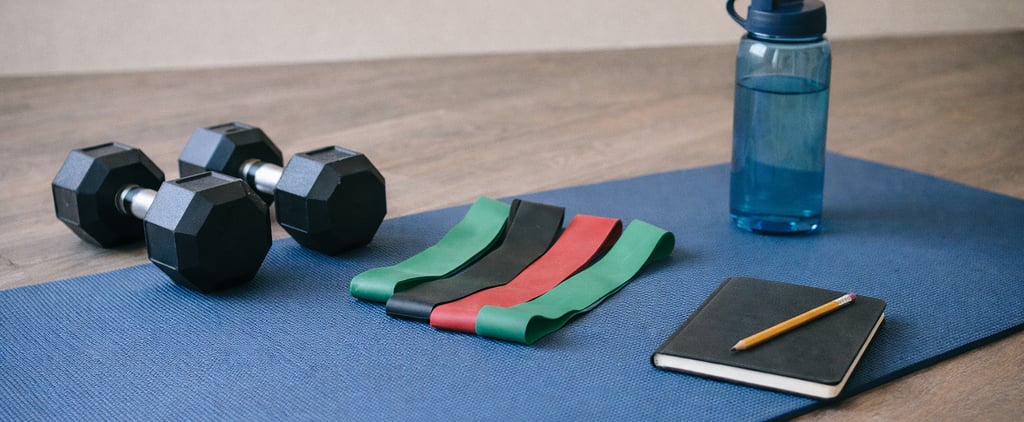
Adjustable dumbbells. This is one of the most helpful pieces of equipment for anyone at home looking to gain strength. You can use adjustable dumbbells to do a range of upper, lower, and middle body exercises.
With dumbbells, beginners can perform exercises such as:
Squats
Lunges
Military press
rows
chest presses.
But as you get stronger, you can gradually increase the weights. You can see why dumbbells are the ideal long-term home training investment.
2. Resistance Bands
Resistance bands are small, cheap, and incredibly useful. Bands provide resistance through elastic tension and can be used for both strength and mobility.
You can use bands to teach beginners correct movement patterns and help take some pressure off your joints.
They are especially helpful for:
assisted pull movements
glute exercises
shoulder strengthening
stretching and mobility
Another advantage of resistance bands is portability. For travelers who want to continue their fitness regimen, resistance bands are a suitable option.
3. A Bench or Step Platform
Just one workout bench (or a stable step stool) provides a variety of beginner-friendly exercises. This tool can support movements such as:
step-ups
incline push-ups
dumbbell chest presses
seated shoulder exercises
You can even use a household step or a solid chair to get started. The key is to have a flat surface to support you in various workout positions.
4. Exercise Mat
This exercise mat will support your back and shoulders during core workouts, planks, floor stretches, and more. Plus, it protects your knees and elbows.
This is really nothing special, but it made my home training more comfortable and longer.
What Beginners Do NOT Need
One of the most common mistakes beginners make is believing they need a large collection of equipment before starting.
In reality, beginners do not need:
expensive multi-station gym systems
heavy squat racks
large machine equipment
complicated workout devices
These tools are often useful for advanced training, but they are not required to begin building strength.
Starting with minimal equipment allows beginners to focus on learning basic movements and building confidence.
As strength improves over time, additional equipment can always be added later if needed.
This is probably the biggest mistake beginners make. If they think they need a plethora of devices to learn before beginning.
In reality, beginners do not need:
expensive multi-station gym systems
heavy squat racks
large machine equipment
complicated workout devices
Now, while these can be excellent for further training, they‘re definitely not necessary to start getting stronger.
Beginner-friendly. Starting simple by not using many weights helps the learner understand the basics and gain confidence.
When you get stronger, you can always buy more equipment if you want to.
The Importance of Starting Simple
The secret to fitness isn‘t having equipment. It‘s consistency.
We often see beginners get motivated to start working out, but then they overdo it. Then they have muscle pain from it, and they stop.
Begin with a small one so it isn‘t so hard. You can ease into a simple routine with a few pieces of equipment. The body adapts over time, and little wins add up to significant strength and fitness gains.
Strength training does not require perfection. You have to be patient and make steady progress.
What Comes Next
You’ve learned to approach training with minimal equipment. Now it‘s time to learn how to organize your weekly schedule.
In Part 2, we’ll look at how beginners can build a simple weekly strength training routine at home without expensive equipment.
Start small.
If you keep taking those baby steps, before long, they will have a cumulative effect and become significant to your progress.
Disclaimer:
The information provided on GlowStrong Network is for general educational purposes only and is not intended as medical advice. Always consult with a physician before starting any exercise program. Participation is at your own risk, and GlowStrong Network is not responsible for any injuries.
GlowStrong Network
A fitness and wellness brand built on discipline, consistency, and mindset—created for people committed to long-term personal growth.
Contact
Newsletter
glowstrongnetwork@gmail.com
© 2026. All rights reserved.
Train with purpose. Live with discipline.