Minimal Equipment, Maximum Results – Part 2: A Simple Weekly Strength Training Plan for Beginners at Home
A simple beginner-friendly weekly strength training plan you can follow at home using minimal equipment.
3/25/20263 min read
How Many Sets and Repetitions Should You Do?
You don’t need a full gym to start. A few simple tools can make your workouts easier and more effective:
As an Amazon Associate, I earn from qualifying purchases.
Resistance bands (great for beginners)
Light dumbbells for strength exercises
Disclaimer:
The information provided on GlowStrong Network is for general educational purposes only and is not intended as medical advice. Always consult with a physician before starting any exercise program. Participation is at your own risk, and GlowStrong Network is not responsible for any injuries.





Plank (core exercise)
2–3 sets of 15–30 seconds
Strengthens your core and helps stabilize your body.
If you’re unsure about an exercise, take time to learn the movement. Starting slowly builds confidence and helps prevent injury.
When starting strength training, it’s important not to do too much too soon.
A good starting point for most beginners is:
2 to 3 sets per exercise
8 to 12 repetitions per set
60 to 90 seconds of rest between sets
Start on the lower end if you’re unsure.
For example, begin with:
2 sets
8 repetitions
Then see how your body feels the next day.
Start Small and Adjust
Everyone begins at a different level of strength.
Instead of trying to match a fixed standard, focus on how your body responds.
If an exercise feels too difficult, reduce repetitions
If it feels too easy, increase repetitions slightly
If you feel very sore, give yourself more rest
The goal is not to push to exhaustion, but to build a routine you can maintain.
Learning to adjust based on your own strength is part of the process.
Day 1 – Full Body Strength
Squats (bodyweight or holding canned goods)
2–3 sets of 8–12 reps
Strengthens your legs and supports everyday movements like standing and walking. own strength is part of the process.
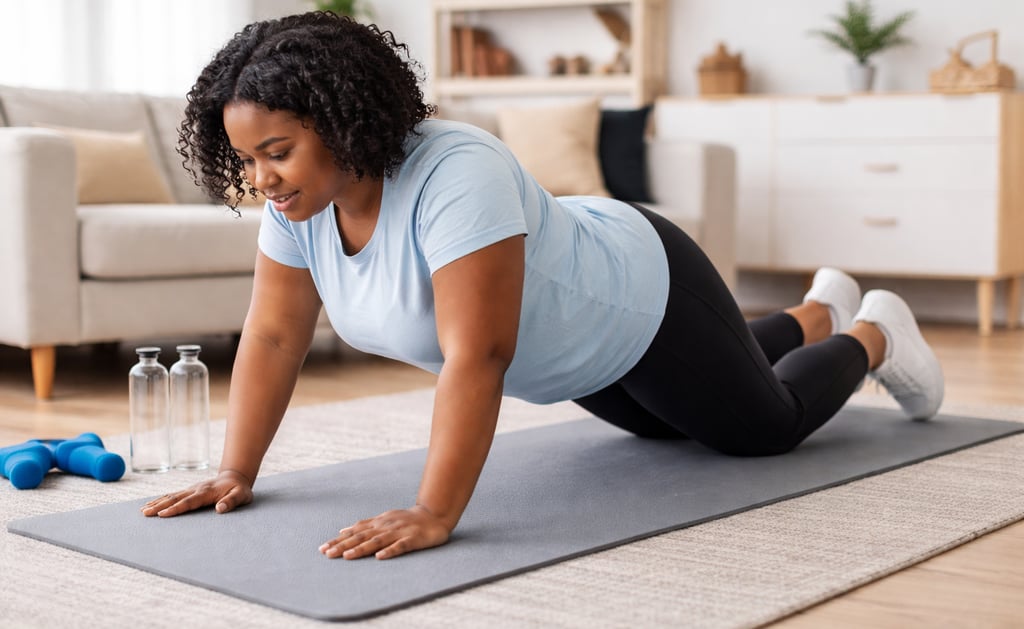
Day 2 - Push-ups (wall, knee, or standard)
2–3 sets of 8–12 reps
Builds strength in your chest, shoulders, and arms.
After a rest day, repeat a similar full-body workout to build consistency:
Day 3 – Full Body Strength
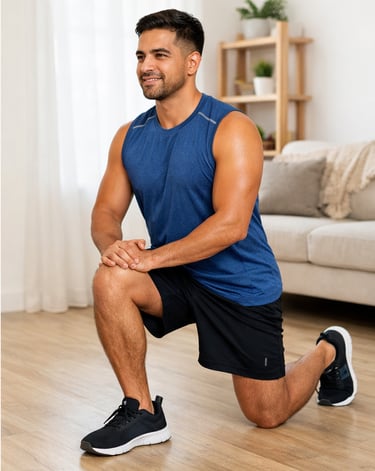
Full and half Lunges (bodyweight or light household items)
2–3 sets of 8–12 reps (each leg)
Improves balance and leg strength.
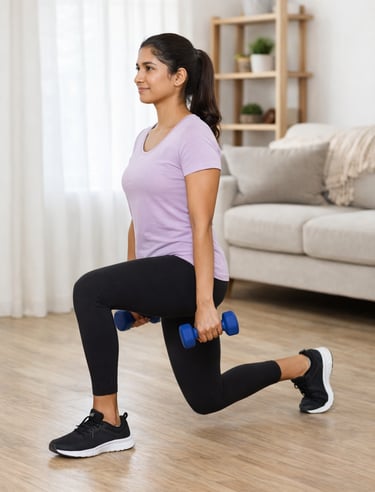
Half-Lunge Option (Beginner-Friendly): (bodyweight or light weights)
If a full lunge feels too difficult, start with a half-lunge. Lower your body partway while keeping your back knee slightly above the floor, then return to standing. This builds strength and balance before you progress to a full lunge.
Rows (resistance bands or pulling movement)
2–3 sets of 8–12 reps
Strengthens your back and improves posture.
Standing or Sitting Shoulder Press (canned goods, bottles, or dumbbells)
2–3 sets of 8–12 reps
Builds shoulder strength and upper-body control.
GlowStrong Network
A fitness and wellness brand built on discipline, consistency, and mindset—created for people committed to long-term personal growth.
Contact
Newsletter
glowstrongnetwork@gmail.com
© 2026. All rights reserved.
Train with purpose. Live with discipline.