How to Stay Consistent With Home Workouts as a Beginner
Learn how beginners can stay consistent with home workouts, avoid burnout, and keep making progress with a simple weekly plan and realistic fitness tips.
STRENGTH & FITNESS
4/7/20264 min read
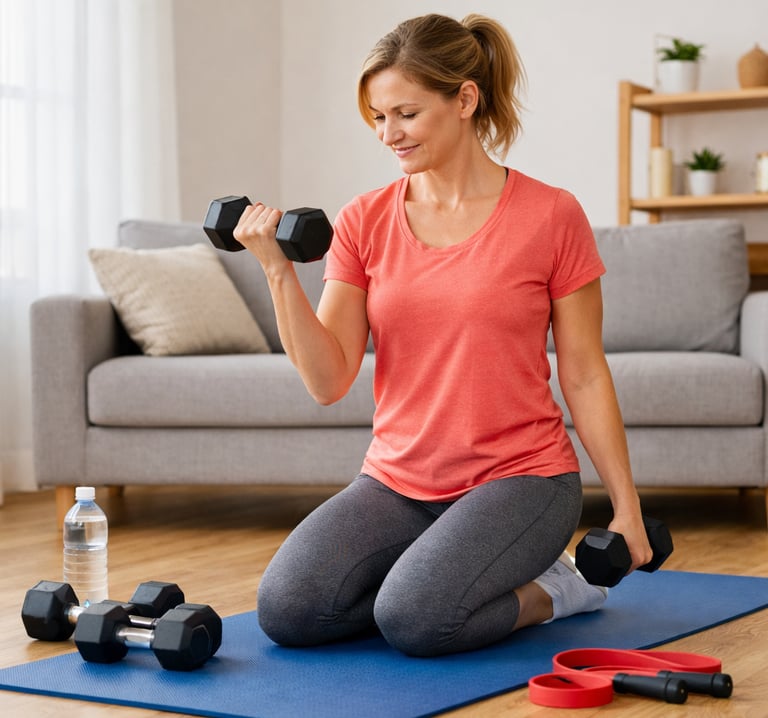
How to Stay Consistent With Home Workouts and Keep Making Progress
Starting a home workout routine is a big step. Staying with it is where real progress happens.
Many beginners feel motivated at first, but after a week or two, life gets busy, energy drops, and the routine starts to fade. That does not mean you failed. It usually means your plan was too hard, too long, or too strict for real life.
The truth is simple. Fitness results do not come from being perfect. They come from being consistent.
If you work out at home, you don't need fancy equipment, long sessions, or an extreme routine. You need a plan you can repeat. Small efforts done over and over build strength, confidence, and discipline.
In this post, you will learn how to stay consistent with home workouts, how to know when to make your workouts harder, and how to keep moving forward without burning out.
1. Focus on consistency before intensity
Many beginners make the same mistake. They try to do too much too soon.
They start with long workouts, train every day, get sore, feel discouraged, and then stop. A better approach is to build the habit first.
That means choosing a routine you can actually follow every week.
A short 15- to 20-minute workout done three times a week is better than a 45-minute workout you quit after four days. When your body and mind get used to showing up, then you can slowly do more.
Consistency builds momentum. Momentum builds results.
2. Use a simple weekly workout schedule
One of the easiest ways to stay on track is to stop guessing what to do each day.
A simple weekly plan helps you stay organized and removes excuses. Here is a beginner-friendly example:
Beginner weekly plan
Monday: Full-body workout
Tuesday: Light walk or stretching
Wednesday: Full-body workout
Thursday: Rest or mobility work
Friday: Full-body workout
Saturday: Easy walk or active recovery
Sunday: Rest
This schedule gives your body time to recover while keeping you active throughout the week.
If three workout days feel too hard at first, start with two. That still counts. The goal is to create a routine that fits your life.
3. Keep your workouts simple
You do not need a different routine every day. You do not need ten exercises in one session either.
Beginners usually do better with a few basic movements repeated consistently. That gives your body time to learn the exercises and improve.
A simple home workout can include:
Squats
Wall push-ups or knee push-ups
Bent-over rows with household items
Glute bridges
Plank holds
Half lunges or supported lunges
These movements work multiple muscle groups and help build a strong foundation.
Repeating the basics is not boring. It is how progress happens.
4. Progress slowly so your body can adapt
Once your workouts start feeling easier, that is a good sign. It usually means your body is adapting. At that point, you can make small changes to keep improving.
You do not need a dramatic jump. Little progress is enough.
Here are a few easy ways to progress:
Add 1 to 3 more reps per exercise
Add one extra set
Slow down your movement for more control
Reduce rest time a little
Use heavier household items for resistance
Move from wall push-ups to incline push-ups, or from incline push-ups to knee push-ups
This is called progressive overload. It simply means doing a little more over time so your body keeps adapting.
The key word is little. Progress should challenge you, not overwhelm you.
5. Do not let missed days turn into quitting
Missing one workout does not ruin your progress.
What hurts progress is turning one missed day into a full stop. Life happens. Work gets busy. Energy changes. Family responsibilities come first sometimes. That is normal.
When you miss a workout, do not waste time feeling guilty. Just restart.
A missed day is a pause, not a failure.
The all-or-nothing mindset keeps many people stuck. Progress comes faster when you learn how to reset quickly and keep going.
6. Track small wins
One of the best ways to stay motivated is to notice progress you might otherwise overlook.
Your progress may show up before the scale changes. For example:
You finish the workout with less rest
Squats feel smoother
You hold a plank longer
You feel more energetic during the day
Your clothes fit differently
You feel more confident moving your body
Write these things down. A simple notebook or notes app is enough.
Tracking small wins helps you see that your efforts are working, even when results feel slow.
7. Make your environment work for you
A home workout routine gets easier when your space supports your goals.
You do not need a full home gym. You just need a small area where you can move safely and a few reminders that make it easier to start.
Try these simple setup tips:
Keep your mat, shoes, or resistance bands where you can see them
Choose your workout time in advance
Save your workout plan on your phone
Wear comfortable workout clothes before your session
Remove distractions for 15 to 20 minutes
The easier it is to begin, the more likely you are to stay consistent.
8. Stay patient with the process
Beginners often expect fast results, but real change takes time.
You are building more than muscle. You are building better habits, better energy, better discipline, and a stronger mindset. Those changes matter just as much as physical results.
Give yourself time to improve. Focus on the next workout, not perfection. The goal is not to do everything at once. The goal is to keep going.
Build a strong routine one session at a time.
Final thoughts
Home workouts can work very well for beginners, but success comes from keeping the plan simple and realistic.
You do not need to be extreme. You need to be steady.
Start with a routine you can manage. Practice the basics. Progress slowly. Miss a day without quitting. Stay patient with yourself. Those habits create lasting results.
The people who make progress are not always the most talented or the most motivated. They are often the ones who keep showing up.
That is where strength begins.
Continue the series
Start from the beginning or follow the full beginner plan:
Part 1: How to Start Working Out at Home
Part 2: Beginner Home Workout Routine You Can Actually Follow
If you’re just getting started, read Part 1: How to Start Working Out at Home before continuing.
GlowStrong Network
A fitness and wellness brand built on discipline, consistency, and mindset—created for people committed to long-term personal growth.
Contact
Newsletter
glowstrongnetwork@gmail.com
© 2026. All rights reserved.
Train with purpose. Live with discipline.